Skip to content

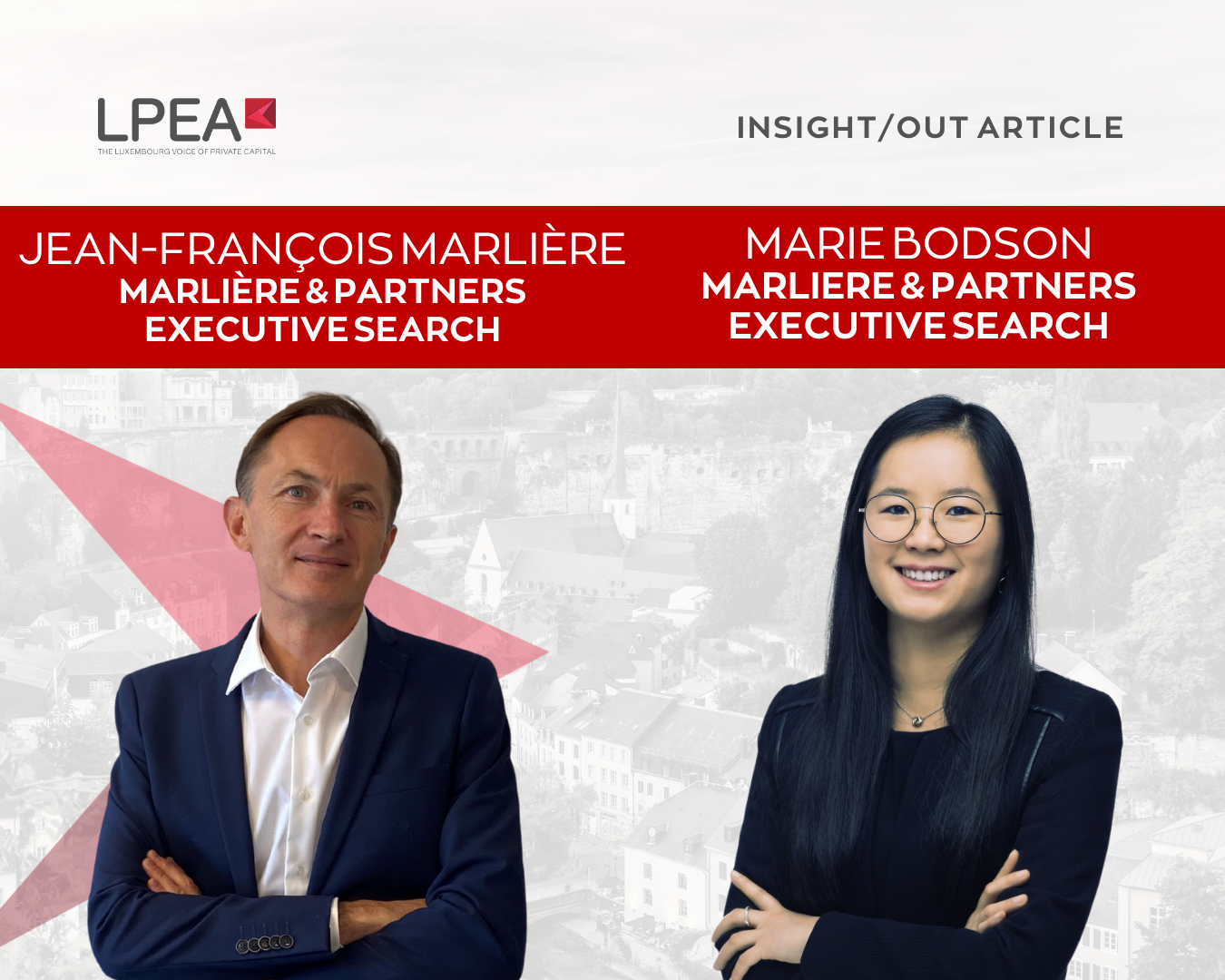
Article by Jean-François Marlière, founding partner of Marlière & Partners Executive Search and Marie Bodson, Consultant at Marliere & Partners Executive Search
Luxembourg has firmly established itself as a leading hub for alternative investments, private equity, and venture capital, attracting top-tier professionals from across Europe and beyond. Its political and regulatory stability, combined with a diverse financial ecosystem, creates a strong foundation for career development and operational growth. Additionally, initiatives that support relocation, family integration, and competitive incentives make Luxembourg an increasingly attractive destination for skilled international talent. In this interview, we explore the factors that drive Luxembourg’s appeal for professionals and investors, and how the ecosystem supports long-term career growth.
What makes Luxembourg an attractive place to live and work for international professionals in private equity and venture capital?
Several factors contribute to Luxembourg’s strong appeal for professionals working in private equity and venture capital. In recent years, the market has seen a growing number of small and medium-sized private equity firms, as well as Single-Family Offices, establishing operations in the country and expanding their local teams. This trend has contributed to the development of a dynamic ecosystem that offers professionals a broad range of career opportunities across different types of structures and investment strategies. For these firms, Luxembourg provides a particularly attractive environment thanks to its favorable tax framework, access to a highly qualified and multilingual talent pool, and the presence of experienced professionals who are familiar with the complexities of international investment structures.
Another important factor supporting Luxembourg’s attractiveness is the ease with which international professionals can integrate into the local market. English is widely used as a working language across the financial sector, which significantly lowers barriers for foreign talent. In addition, the country benefits from its central location in Europe and from relatively limited administrative or cultural obstacles to relocation. Together, these elements make Luxembourg an accessible and convenient hub for international professionals.
As a result, the country continues to attract individuals with strong academic credentials and solid professional experience from across Europe and beyond. Their arrival further strengthens the depth of expertise available in the market, supports the continued growth of the alternative investment industry, and contributes to the overall dynamism and international character of Luxembourg’s financial center.
How does Luxembourg’s financial ecosystem support long-term career development in alternative investments?
Luxembourg’s financial ecosystem is particularly conducive to long-term career growth in alternative investments. The market’s diversity allows professionals to gain experience across a wide range of institutions, including asset managers, fund administrators, advisory firms, depositary banks, and specialized service providers. This diversity enables individuals to build broad expertise while exploring different roles and career paths within the same ecosystem. Over time, professionals can deepen their specialization while maintaining a comprehensive understanding of the industry, which is highly valuable in the alternative investment space.
The country also offers strong mobility and networking opportunities. The market is flexible and dynamic, enabling professionals to move relatively easily within the Luxembourg job market without compromising their career trajectories or earning potential. Its relatively small size, combined with numerous industry events, conferences, and professional gatherings, encourages professionals to connect and build strong relationships across firms and functions. These close professional networks often facilitate career transitions and collaboration across the sector. In addition, exposure to international projects and the opportunity to work alongside experienced colleagues from diverse backgrounds accelerate skill development and allow professionals to quickly gain expertise in complex cross-border investment structures.
Another important factor is Luxembourg’s robust regulatory and institutional framework. The strong emphasis on professionalism, compliance, and best practices creates a structured and high-standard working environment. Professionals develop technical and regulatory expertise that is highly valued not only in Luxembourg but also in other leading financial centers. This strengthens long-term employability and makes the experience gained in Luxembourg highly transferable internationally.
Finally, Luxembourg’s ecosystem places a strong emphasis on continuous professional development and community building. The country offers a wide range of professional associations, specialized training programs, certifications, and networking platforms that allow professionals to continue learning throughout their careers. These initiatives foster a sense of belonging to a well-connected professional community where knowledge sharing, mentorship, and collaboration are encouraged. Together, these factors create an environment that supports sustainable career development and long-term growth in the alternative investment industry.
How does political and regulatory stability in Luxembourg enhance its attractiveness for fund managers and investors?
Luxembourg has long been recognized as a reliable financial hub, with political and regulatory stability that inspires confidence among fund managers and investors. This predictability allows firms to plan long-term operations while reducing uncertainty, which is essential for sustained growth.
From a recruitment perspective, stability also supports international talent development. Professionals are more likely to commit to a market where regulations are consistent, and careers can be planned with confidence. Furthermore, this stability attracts senior executives and specialized professionals, strengthening the overall talent pool and fostering a competitive, knowledge-rich environment.
Overall, political and regulatory stability underpins Luxembourg’s attractiveness for investors and professionals alike and continues to foster the growth of new entities in the market.
Could you elaborate on some of the key measure that you believe could enable Luxembourg to become the “place to be “for key talents?
From a headhunter’s perspective, several initiatives could further strengthen Luxembourg’s attractiveness for top-tier talent and reinforce its position as a leading hub for alternative investments and international finance.
One key area is housing accessibility. The high cost and limited availability of housing remain one of the main challenges for professionals relocating to Luxembourg. Measures aimed at increasing housing supply, facilitating access to rental accommodation, or supporting relocation packages could significantly reduce this barrier and make the transition to Luxembourg smoother for international talent.
Another important aspect is integration support for newcomers and their families. While Luxembourg is an international and multicultural country, relocating professionals often face practical challenges during their first months in the country. Initiatives such as language courses, integration programs, and support services for spouses and families can play a crucial role in helping new arrivals settle in more quickly. These measures not only facilitate social and cultural integration but also increase the likelihood that professionals will choose to remain in the country over the long term.
Additionally, targeted tax incentives for highly skilled professionals could further strengthen Luxembourg’s competitiveness compared to neighboring countries. Recent measures have been introduced in this direction, such as the impatriation regime and the new regime for carried interest. These initiatives are promising and demonstrate the country’s willingness to attract international expertise, although it is still too early to fully assess their long-term impact on Luxembourg’s overall attractiveness.
Finally, continued investment in professional development, education, and the promotion of Luxembourg’s financial ecosystem internationally will remain essential. By fostering a supportive environment for both professionals and their families, Luxembourg can retain critical talent, attract the skills needed to support the continued growth of the alternative investment sector, and further consolidate its position as a hub for international professionals and investors.