Skip to content

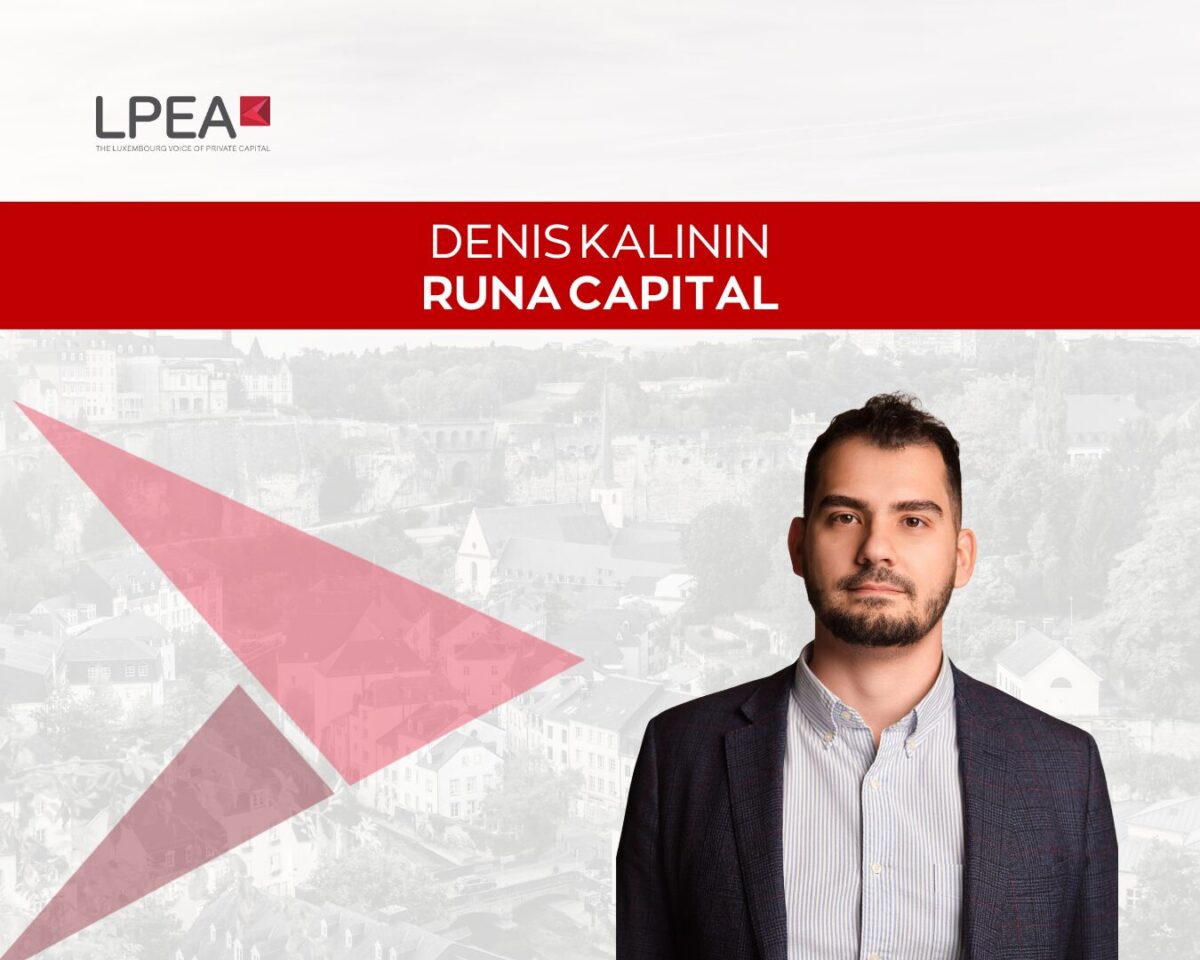
Article by Denis Kalinin, Head of APAC at Runa Capital
China’s venture capital ecosystem is undergoing its most significant transformation in years, and a small European nation of 650,000 people has emerged as the critical bridge connecting Chinese GPs with European markets. As geopolitical headwinds reshape global capital flows, Luxembourg is positioning itself as the ideal European platform for Chinese fund managers seeking to diversify beyond the United States.
China’s Capital Market Evolution
China now operates the world’s second-largest VC ecosystem, with $71B deployed across venture capital and tech-focused PE in 2025, according to the Chinese VC/PE database ITjuzi. Exits are also broadly available in China: in 2025, VC/PE exits in China tripled year-on-year. More notably, deep tech exits across AI, compute, robotics, energy, and space reached $259B, surpassing the United States’ $206B. By this measure, China has quietly become the world’s leading market for deep tech venture returns.
The shift toward 出海 (going global) represents a fundamental strategic pivot. According to Bain & Company’s 2026 Greater China Private Equity Report, domestic GPs continued to allocate approximately 20–30% of capital internationally, leveraging access to the China market, supply chain advantages and portfolio connections. This isn’t opportunistic expansion — it’s survival-driven diversification as domestic markets consolidate and competition intensifies across every vertical from semiconductors to consumer tech.
The US Challenge and European Alternative
Historically, the United States absorbed the vast majority of Chinese GP overseas expansion efforts. The logic was straightforward: Silicon Valley ecosystem access, deep LP networks, and predictable legal frameworks. But the Investment Security Act restrictions, CFIUS intensification, and bipartisan consensus on tech competition have fundamentally altered the equation. Based on my conversations with Chinese GPs, even top-tier firms report sub-50% renewal rates from their US institutional LP base for new USD fund vintages.
Europe presents a compelling alternative: €17T in combined GDP, mature institutional LP base managing $31T in assets, and a regulatory environment that remains technology-neutral despite occasional friction on specific sectors. More critically, Europe is actively pursuing strategic autonomy from US dominance in tech infrastructure, semiconductors, and AI development — creating natural alignment with Chinese innovation strategies.
The European Complexity
Recent diplomatic warming between Beijing and Brussels has opened new possibilities. Belgian Foreign Minister Maxime Prévot’s April 2026 visit to Beijing signaled renewed engagement, with China expressing willingness to strengthen cooperation with both Belgium and the EU. President Xi’s March 2026 meetings with German Chancellor Friedrich Merz in Beijing, followed by a state visit to Greece, further underscored a shared commitment to “de‑risking without decoupling” in areas like green transition and advanced manufacturing. Trade volumes between China and the EU reached record levels in Q1 2026, with bilateral trade flows totalling $213B and technology components including EVs and battery materials representing the fastest-growing segments.
Yet Europe remains fundamentally challenging for Chinese market entrants. The continent fragments across 27 regulatory regimes, 24 official languages, and radically different business cultures spanning from Nordic transparency to Mediterranean relationship-driven models. GDPR compliance alone requires specialized legal infrastructure. Anti-subsidy investigations into Chinese EV manufacturers and solar companies demonstrate that political economy remains contested terrain. Cultural barriers compound legal complexity — German engineering rigor operates nothing like French administrative processes.
Why Luxembourg Solves the European Puzzle
Luxembourg operates as Europe’s most pragmatic jurisdiction for Chinese GPs entering the continent. The country maintains strategic neutrality that extends beyond rhetoric. Luxembourg hosts 37.6% of all global investment funds investing in China, ahead of Hong Kong and the US as a domicile for China‑focused vehicles. Seven of the largest Chinese banks have established their European hubs in Luxembourg to manage asset and wealth management, serving as a bridge between Chinese clients and European investments. The Grand Duchy signed a bilateral investment treaty with China in 2017 that remains one of Europe’s most favorable frameworks.
The numbers tell the story: Luxembourg dominates European fund infrastructure with 50% market share in domiciled investment vehicles, representing €7.2T in assets under management. For Chinese GPs, this translates to battle-tested service providers fluent in cross-border complexity. The Big Four accounting firms, 20+ depositary banks, and 150+ specialized law firms create an ecosystem where Luxembourg administrators have structured everything from RMB-denominated vehicles to VIE structures compatible with EU regulations.
Regulatory efficiency matters operationally. Luxembourg’s Reserved Alternative Investment Fund (RAIF) framework allows Chinese GPs to launch funds in 4-6 weeks without prior regulatory approval, while still accessing the AIFMD passport for EU-wide distribution. Contrast this with French AMF authorization timelines of 4-6 months or German BaFin processes requiring 6-9 months.
Tax and Talent Advantages
The revised carried interest regime approved in January 2026 positions Luxembourg competitively against London and Zurich. Fund managers performing investment functions now access preferential tax treatment, with carried interest taxed at one-quarter of ordinary income rates (effective rate of ~11.5% versus 45.78% standard) when specific conditions are met. The subscription tax on fund NAV sits at just 0.01% for Private Equity structures — 10x lower than comparable European jurisdictions.
For Chinese GPs building European teams, Luxembourg’s inpatriation regime offers significant advantages. New residents qualify for partial income tax exemptions on certain compensation elements for up to 8 years, while social security contributions cap at €154,255 annually (versus uncapped systems in Belgium or France). The multilingual workforce — with 70%+ speaking English, French, and German — eliminates the single-language constraints that plague fund operations in Madrid or Milan.
The Tech Validation
When the leading Chinese autonomous driving company Pony.ai selected Luxembourg for its European autonomous vehicle testing headquarters in 2023, the decision validated the jurisdiction’s tech credibility. The Chinese self-driving startup chose Luxembourg over Berlin, Paris, and Amsterdam based on three factors: regulatory clarity for AV testing, access to connected vehicle infrastructure pilots, and crucially, the ability to structure European operations through the same legal entities managing their regulatory and customer relationships.
Ant Group, the developer of Alipay, prioritized Luxembourg for its expansion based on three factors: the CSSF’s robust Electronic Money Institution (EMI) framework, which provides an immediate EEA passport to all 30 member states; the jurisdiction’s proactive adoption of MiCA-compliant standards for e-money tokens; and the logistical advantage of consolidating its multi-billion euro pan-European merchant settlement and AML compliance operations under a single, highly-regarded regulatory supervisor.
The momentum is continuing into 2026, with new Chinese entrants reinforcing Luxembourg’s positioning as a European launchpad for regulated tech and mobility platforms. According to Xinhua News Agency, a growing number of Chinese companies are selecting Luxembourg not just for market access, but for full-stack European deployment — combining regulatory licensing, treasury management, and operational headquarters in one jurisdiction.
Market Access and Distribution
Beyond fund structuring, Luxembourg delivers genuine European market access. The AIFMD marketing passport allows Luxembourg-domiciled funds to raise capital from professional investors across all 27 EU member states plus Norway, Iceland, and Liechtenstein. For Chinese GPs, this means a single regulatory filing unlocks distribution to European pension funds managing €3T+ in assets, insurance companies allocating to alternatives, and sovereign wealth vehicles from Ireland to Sweden.
The country’s neutrality provides commercial advantages. European LPs hesitant to invest directly in Shanghai-domiciled RMB funds demonstrate greater comfort with Luxembourg structures, even when the same Chinese GP manages both vehicles. The jurisdiction signals governance standards, regulatory oversight, and legal recourse frameworks that reduce perceived risk without changing underlying investment strategies.
Decision-Making Efficiency
The scale advantage cannot be overstated: Luxembourg’s entire financial sector regulatory apparatus operates within a government structure where ministers and other key decision makers remain accessible. Chinese GPs report scheduling meetings with Luxembourg Finance Ministry officials in 2-3 weeks — timelines impossible in Paris, Frankfurt, or London bureaucracies. The CSSF financial regulator maintains English-language guidance, processes inquiries rapidly, and demonstrates familiarity with Chinese market structures from years of processing cross-border flows.
This efficiency extends to corporate mechanics. Company formation completes in 5-7 business days. Banking relationships with institutions experienced in RMB transactions (BNP Paribas, ING, Deutsche Bank Luxembourg) establish in 2-3 weeks. The RCS business registry digitally processes all filings, with English accepted as a primary language.
The Road Ahead
For Chinese GPs evaluating European expansion, Luxembourg represents the path of least resistance through regulatory complexity while maintaining maximum strategic optionality. The jurisdiction doesn’t solve every challenge — building portfolio company networks in target markets still requires local presence, and LP relationship development demands physical proximity to decision-makers in London, Munich, and Stockholm.
But as a legal domicile, fund administration hub, and European beachhead, Luxembourg delivers unmatched combination of infrastructure depth, regulatory pragmatism, and political neutrality. As US-China tech decoupling accelerates and Chinese GPs seek permanent European presence, the China-Luxembourg corridor will define the next decade of cross-border venture capital flows.
The toolkit is proven. The ecosystem is mature. For Chinese fund managers ready to go global, Luxembourg isn’t just a European option — it’s the European solution.