Skip to content

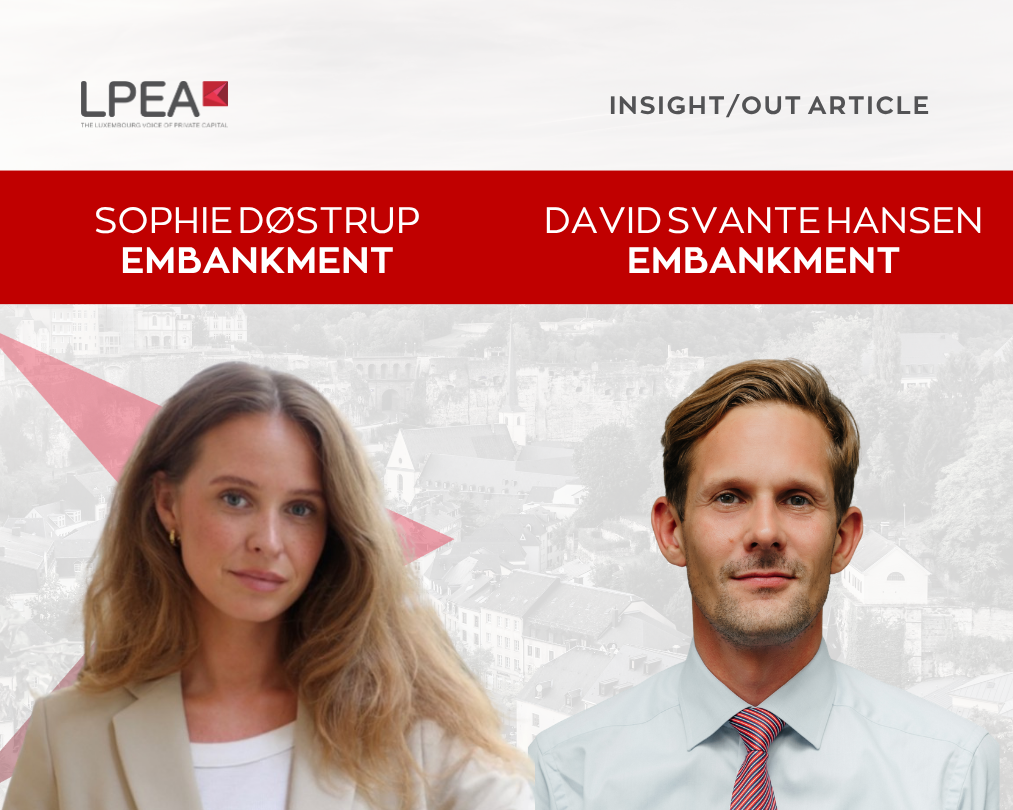
By Sophie Døstrup, Manager of Partnerships at Embankment, and – David Svante Hansen, Co-founder and CEO at Embankment, as published in Insight/Out magazine #38.
As private markets evolve, so do the questions that define how fund operations are structured and delivered. What was once a matter of tools, efficiency, and process optimization is increasingly becoming a question of scalability, control – and ultimately, reliability of outcomes.
The shift is unfolding as the operational landscape becomes increasingly complex. Much of the industry’s attention remains focused on front-office innovation – new tools, new asset classes, new ways of creating value. But beneath this surface, a different transformation is taking place. A shift from tools to outcomes.
Beyond Digitization: When Tools Reach Their Limits
Over the past decade, technology has played a central role in modernizing private markets operations. The widespread adoption of software platforms, data systems, and workflow tools has significantly improved efficiency and reduced reliance on manual processes. This wave of digitization – often framed as Software-as-a-Service – has been both necessary and transformative.
Yet, for all its progress, it has not fundamentally changed the operating model.
Managers still find themselves coordinating multiple providers, navigating fragmented workflows, and reconciling data across systems and jurisdictions. While tools have become more sophisticated, the responsibility for connecting them remains somewhat unchanged.
Technology has made operations more efficient, yes. But not necessarily simpler.
As private markets continue to grow, this gap becomes more visible. Fund structures span multiple jurisdictions, investor expectations continue to rise, and regulatory requirements continue to expand – complexity that cannot be handled through improvements in tooling alone.
In cross-border environments where international reach meets local substance, these dynamics are particularly evident. Luxembourg is a clear example, where cross-border structures and regulatory expectations leave little room for fragmented operating models. Here, this dynamic is no longer simply an operational challenge – it begins to define how firms can scale and exposes the limits of existing operating models.
For many years, operational decisions have been framed around selecting systems and defining workflows. Control has been closely associated with visibility.
Today, that perspective is changing. As, David Svante Hansen, CEO at Embankment, puts it: “In fund operations, the question is no longer what tools you use – but whether the outcome is delivered.” He points to a broader redefinition of the operating model. What matters is no longer the configuration of systems in the back office, but whether the end result is accurate, timely, and dependable.
From Processes to Outcomes
The emerging model offers a different way forward. Rather than attempting to standardize processes, it focuses on standardizing outcomes. Consistency is achieved at the level that matters most – what is delivered – while allowing flexibility in how it is are produced.
This allows global ambitions and local expertise to coexist more naturally. It enables firms to scale without losing the nuance required in different jurisdictions, a balance that sits at the core of Luxembourg’s role as a cross-border hub, where local substance remains important.
From Support Function to Embedded Capability
Technology remains at the center of this evolution – but its role is changing. While the first phase of digital transformation was about digitizing existing processes, the current phase is less visible. It is characterized by the integration of systems, the structuring of data across workflows, and the introduction of intelligence into operations.
Automation reduces manual tasks, while unified data improves consistency and transparency. Now, information is not only being processed, it is increasingly being validated and analyzed in real time to identify inconsistencies before they become issues.
This introduces a new and different approach to service delivery – one in which data flows seamlessly across workflows, validations happen continuously, and outcomes are produced through embedded processes rather than assembled manually. An approach, that redefines how operational responsibility is structured.
In practice, this does not mean that the underlying challenges disappear – but that they are absorbed differently. “Instead of sitting at the level of the manager, it is increasingly handled within integrated operational frameworks, supported by technology and specialized expertise. For managers, this changes the nature of their involvement. It’s no longer about overseeing workflows in detail, but about maintaining control through transparency, access to information, and confidence in outcomes.” David Svante Hansen notes.
A New Definition of Value
The transition from tools to outcomes reflects a broader shift in how value is created in private markets operations.
As private markets continue to expand internationally, the role of jurisdictions that can support this operational depth becomes increasingly important. Luxembourg, with its combination of regulatory robustness, global connectivity, and deep operational expertise, sits at the center of this shift. It has evolved beyond a structuring hub into a platform where complex, cross-border fund operations can be executed with consistency and confidence.
In an environment where outcomes matter more than processes, such ecosystems play a critical role – not only in enabling scale, but in ensuring that scale does not come at the expense of control.
Ultimately, the question is no longer how operations are performed, but whether they deliver what the market increasingly expects: clarity, consistency, and confidence in the outcome.