Skip to content

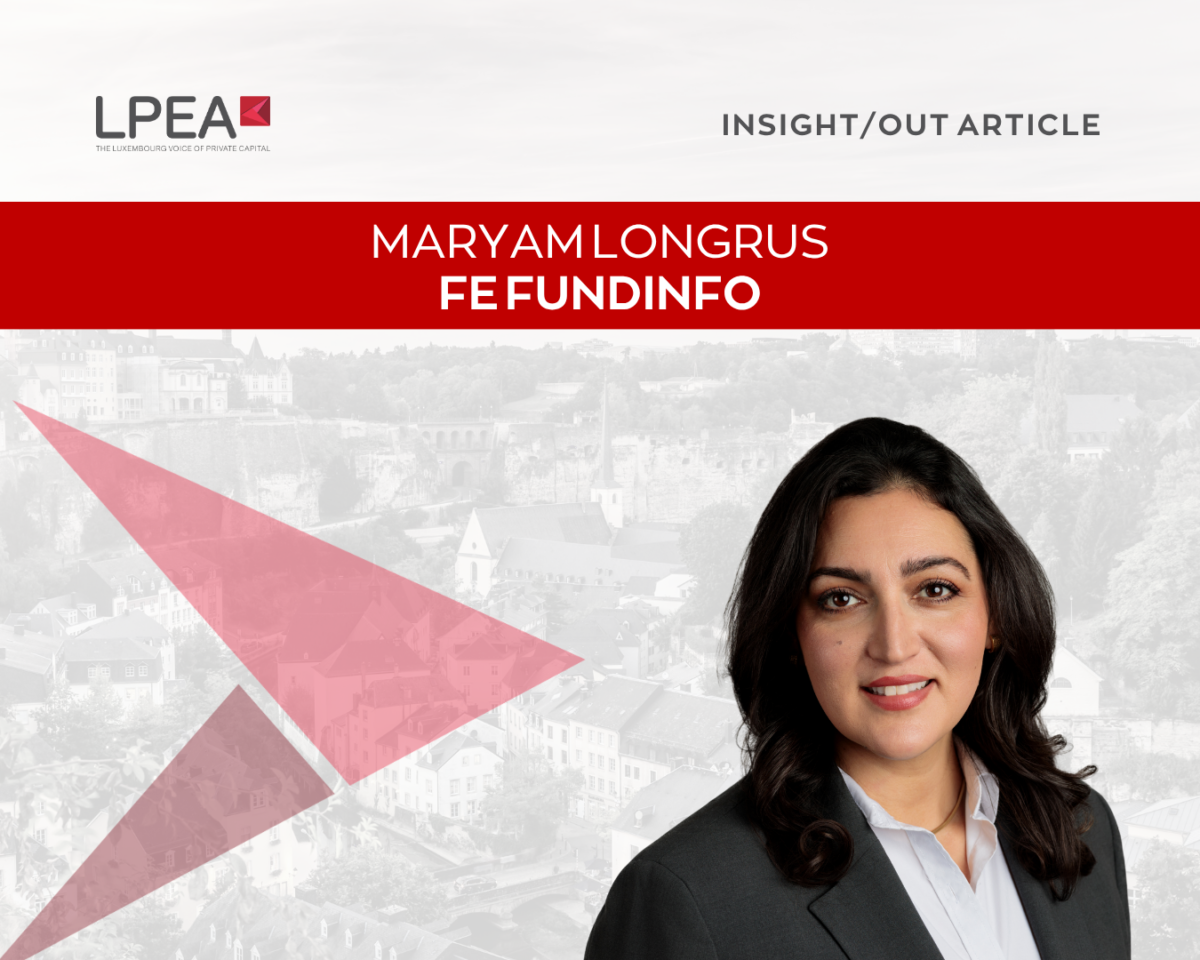
By Maryam Longrus, Head of Private Markets at FE fundinfo, as published in Insight/Out magazine #39.
According to FE fundinfo’s latest asset management research, 68% of wealth managers plan to expand their ELTIF offering over the next 12 to 24 months, making it their most popular planned product structure. Almost half of asset managers (49%) are preparing to do the same. The question therefore is no longer whether ELTIFs will grow. It is who will capture that growth.
Luxembourg was ready when the market changed
Luxembourg currently holds a commanding position. Based on the ESMA register as of June 2026, the country accounted for around 54% of European ELTIFs by both number and assets under management. This comes as no surprise, given the country has spent decades building the regulatory expertise, distribution networks and fund-servicing infrastructure to support cross-border products. But the next phase of the ELTIF market will be more competitive and far more operationally demanding.
France and Ireland may still be smaller centres, but they have grown faster from their respective starting points since ELTIF 2.0 came into force. Luxembourg remains ahead, but the gap is becoming narrower. The revised ELTIF regime, applied since January 2024, removed several of the features that had limited the original structure:
- It expanded the range of eligible investments,
- gave managers greater portfolio flexibility and
- abolished the previous minimum investment threshold for retail investors
As a result, it strengthened the ELTIF’s role as a genuinely cross-border European product. Luxembourg was well positioned to benefit because much of the required infrastructure was already in place: established structures such as the UCI Part II structured as a SICAV, experienced AIFMs, depositaries, administrators, law firms and distributors. The CSSF had deep experience of complex, cross-border products, while private banks and wealth managers across Europe were already comfortable working with Luxembourg funds.
That familiarity matters. A European passport is most powerful when the product carrying it comes from a jurisdiction that distributors and investors already trust, which Luxembourg built largely through UCITS. It is now applying the same regulatory and distribution expertise to private markets.
From FE fundinfo’s perspective, this shift is visible across the market. Infrastructure originally designed to support public funds is being adapted to handle private assets at scale, however, the transition is only partly complete.
Retail access creates a servicing problem
ELTIFs may make private markets more accessible, but placing an illiquid strategy inside a retail-compatible structure does not automatically make it retail-ready. Asked about the biggest challenges associated with private markets and alternative assets, 32% of respondents of FE fundinfo’s survey identified data standardisation across managers, administrators and service providers. The same proportion pointed to liquidity management and investor education. Regulatory reporting and disclosure requirements were cited by 30%, while 26% selected private-markets retailisation and the integration of public- and private-market data.
Retail investors and their advisers expect regular valuations, accessible reporting, comparable information and clear communications, and private-market assets were not built around those expectations. NAVs may be calculated less frequently. Valuation methods differ. Portfolio data is harder to standardise. Capital calls, distributions and other lifecycle events do not fit easily into systems designed for daily-dealing funds.
Liquidity is an equally sensitive issue. ELTIFs often offer some degree of liquidity subject to various terms and conditions, but these must be carefully aligned with portfolios containing assets intended to be held for years. Additionally, managers must communicate clearly what liquidity is available, when it may be restricted and how the underlying assets are valued. Retail access cannot come at the expense of a realistic understanding of risk.
The cost of this infrastructure also matters. Private-markets democratisation will remain limited if operational complexity makes products too expensive to run or pushes fees beyond an acceptable level.
Regulation is becoming an operating challenge
AIFMD II raises the bar further as its implementation introduces new requirements around areas including delegation, loan origination, liquidity management, reporting and depositary arrangements. Luxembourg’s decision not to add extensive national requirements helps preserve flexibility but still the practical burden on managers is increasing.
At the same time, an ELTIF does not operate under a single, self-contained rulebook. The label interacts with the fund’s legal structure, its AIFM, its domicile, its distribution markets and its target investor base, which creates complexity not only for investors, but also for practitioners. The intention may be to make cross-border distribution easier; however, in practice, managers still need to navigate overlapping frameworks, templates, notifications and local workflows.
As a result, regulatory documentation and fund registration can no longer be treated as administrative tasks completed at the end of the launch process but should rather become part of a manager’s competitive infrastructure. The ability to maintain accurate data, produce the right documentation and distribute consistent information across markets increasingly affects both speed to market and scalability.
This is reflected in FE fundinfo’s survey: when choosing a data, regulatory reporting or fund-operations partner, 38% of Luxembourg respondents prioritised knowledge of the ecosystem and cross-border distribution requirements, the most frequently selected consideration.
Where Luxembourg needs to move faster
Luxembourg has the expertise to address these challenges, but three areas require particular attention:
- Data standardisation. Retail investors and advisers need clear, comparable information across ELTIFs. Today, private-market data still varies widely between managers and service providers. FE fundinfo is working with organisations including openfunds to help close this gap, but we need wider participation from private-market firms.
- Secondary-market infrastructure. ELTIF 2.0 gives managers more flexibility to build liquidity mechanisms into products, but regulation cannot create liquidity by itself. Effective transfer and secondary-market arrangements will require reliable pricing, transparent fund information and efficient operational processes. This creates an opportunity for Luxembourg to become a centre for the infrastructure surrounding the product throughout its lifecycle.
- Cost and speed. While other European jurisdictions are investing in their own private-market capabilities, managers will continue to choose Luxembourg provided its expertise translates into practical advantages: predictable regulation, efficient launches, scalable servicing and effective access to distributors.
The next lead must be earned
ELTIFs offer Luxembourg the chance to extend its cross-border fund leadership into one of the defining trends of the coming decade: wider access to private markets. Few jurisdictions can match its combination of regulatory experience, specialist service providers, international distribution expertise and investor recognition, but this might not be enough for the next phase.
To stay in the front row, it will require public-markets-grade data, documentation and distribution infrastructure, combined with a genuine understanding of private assets, their valuations, liquidity constraints and long investment cycles. Luxembourg won the first phase of the ELTIF market by being ready when the regulatory opportunity arrived. To win the next one, it must prove that it can make a larger, more retail-facing and more complex market work efficiently, and at a competitive price.
Read the full survey: Asset Managers Report 2026: Growth by design