Skip to content

Article by By Michał Gromek, Compliance Director, G7 Research Group.
I argued that blockchain finance is no longer emerging – it’s maturing. The real question for Europe’s financial centres is simple: how long will traditional financial providers take to discover that it exists and can be used.
The tokenisation of assets isn’t the future of finance – even though the regulation is not 100% clear, it’s happening now. Every day, somewhere in the world, a financial instrument, a piece of real estate, or an entire fund structure is being mirrored on a blockchain.
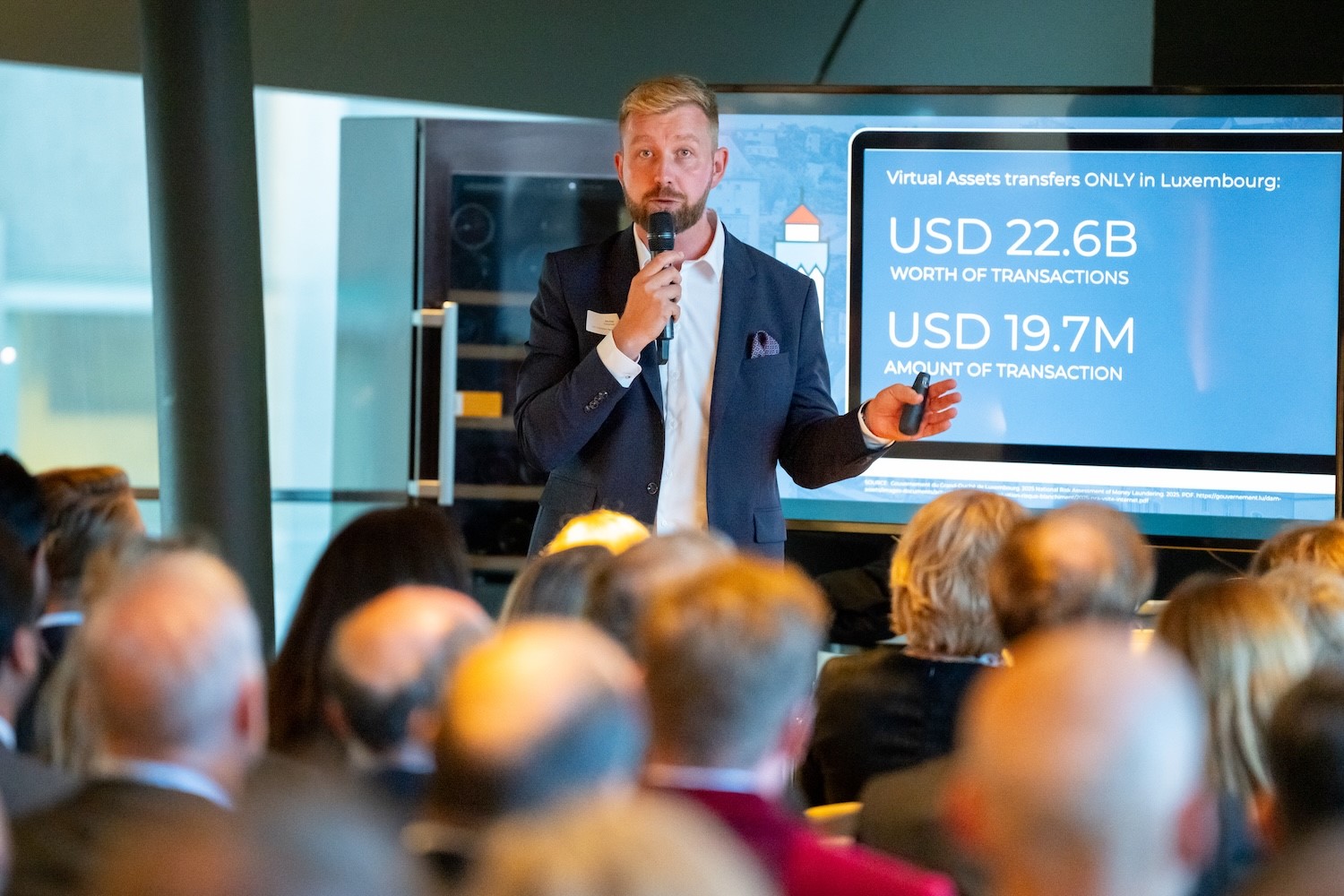
These reflections were shared during Q Securities’ fifth anniversary event in Luxembourg, where the firm – already known as a depository for alternative investment funds – outlined its next chapter: preparing to extend its expertise into crypto custody and trading solutions, once the necessary authorisations are secured.
Already in 1984 William Gibson said that the future is already here – it’s just not evenly distributed – so where does Luxembourg stand today?
Some jurisdictions have been working with blockchain finance for years; others are still watching from the sidelines. However, the technology has matured, regulations have caught up, and the industry can no longer afford to treat blockchain as a curiosity. Luxembourg, which has been at the heart of financial services of Europe, has yet to jump on this train of innovation, which has already left its station.
Regulation has finally arrived
It took nearly seventeen years – from Satoshi Nakamoto’s white paper to today – for blockchain finance to reach regulatory acceptance as well as for stakeholders within it to mature as financial institutions. For most of that time, innovators built in the dark while lawmakers tried to catch up and the media had a tendency to put a spotlight on challenges.
Now, we finally have clarity. Europe’s MiCA, DORA, and DLT Pilot Regime collectively establish the world’s most comprehensive legal framework for digital finance. MiCA gives us the rules of the game. DORA ensures that cybersecurity and operational resilience aren’t an afterthought. The DLT Pilot Regime also allows for regulated experimentation – a sandbox for tokenised securities. There is a reason why they are coming in a package at the same time – it is to empower the financial sector while protecting the consumers.
No, these regulations are not perfect, to say the least. But they are a milestone. For the first time, Europe can move forward with a common framework. We can now provide clarity to the financial ecosystem – and Luxembourg, with its decades of experience in fund administration and financial governance, is ideally positioned to lead the way. If it decides to do so, which is currently not the case.
Traditional finance and web3: one world, not two
For too long, we’ve treated “traditional finance” and “web3” as separate universes – conservative institutions on one side, experimental innovators on the other.
But that distinction is no longer helpful. The two worlds are already converging – quietly, in pilot projects, compliance labs, and infrastructure upgrades. The sooner we stop treating blockchain as something alien, the faster we’ll capture its value.
What slows progress now isn’t technology – it’s culture. In conversations with bankers, fund managers, and executives, I’ve noticed a familiar hesitation: a shame-like fear of asking basic questions. Too many leaders worry that admitting ignorance will undermine their authority. However, the truth is that we’re all still learning.
If there’s one piece of advice I give to anyone in financial services, it’s this: start small, but start.
- Open a wallet.
- Explore blockchain-based finances by buying and selling some amounts.
- Bring in individuals who understand this world deeply.
Understanding comes from doing. Besides, too much time is being spent on the technology itself rather than on its application. You would not study the physics of energy distribution from the power plant to the cables at your home that are powering the wifi router in order to connect it, so why do you do so with crypto?
Blockchain and cryptocurrencies are not the same thing. Blockchain is infrastructure – a secure, auditable, programmable backbone that can support every kind of financial transaction. Cryptocurrencies are just one of its first, and loudest, applications.
The case for tokenisation
Among all blockchain applications, tokenisation has the most significant and immediate impact on finance. By representing real-world assets – from real estate to bonds – as digital tokens, we gain efficiency, transparency, and accessibility.
Imagine being able to buy a €1,000 fraction of a building in central Paris or a slice of a private fund investing in alternative, illiquid assets, with all transactions recorded and settled on the blockchain. That’s not science fiction. It’s already happening.
Tokenisation unlocks liquidity in traditionally illiquid markets. It enables smaller investors to access assets previously reserved for institutions, while allowing fund managers to automate administration and compliance. Settlement cycles shrink from days to seconds. Audits become simpler because every transaction is traceable by design.
In short, we can do everything we already do in finance – only faster, cheaper, and more transparently.
Technology isn’t the problem
The real bottleneck isn’t the technology – it’s the mindset. When I speak with traditional institutions, I still hear the same questions:
- “Will tokenisation disappear like the NFT craze?”
- “Should we wait until the market matures?”
- “Is this safe for our clients?”
The answer to all of them is the same: tokenisation is not a trend; it’s infrastructure. It doesn’t matter whether we like it or not – it’s here to stay.
The global financial system is already shifting toward blockchain-based rails. The U.S., Asia and the Gulf states are experimenting at scale and some have even made it a national priority to take the lead globally. Europe has the regulatory clarity they often lack. Now is the time to lead – not to observe.
Adoption doesn’t have to be radical. Begin small. Pilot a tokenised fund. Buy a fractional digital bond. See how it works in practice. Once you start using blockchain, you realise it’s not as complex as it seemed from the outside. Remember how you started to use the internet for the first time, how insecure we all felt, being afraid of being hit by viruses. Even though viruses on the internet do exist, we found a way to contain them or at least limit the risk. There is a big chance that you read this article on a smartphone connected to the internet, why are you not afraid of internet viruses anymore? Because you have tested it before.
Why Luxembourg can lead
Luxembourg has all the necessary ingredients to become Europe’s hub for blockchain-based finance: a strong regulatory culture, international credibility, and decades of expertise in fund structuring and depository services.
But leadership won’t happen by default. It requires ecosystem depth – more regulated custodians, fund administrators, auditors, and legal experts who understand how to handle digital assets. The CSSF has already shown leadership by issuing early guidance on crypto funds. The next step is to expand that capacity into a living, breathing ecosystem.
Trust is Luxembourg’s strongest currency. The same principles that built the Grand Duchy’s financial success – compliance, investor protection, and cross-border cooperation – will also define its role in the digital asset era.
Technology can enhance trust, but people still play a crucial role in building it. That’s why education and collaboration between traditional and blockchain professionals matter more than ever.
Several Luxembourg institutions are already positioning themselves to serve this new market. Q Securities, for instance, is preparing to expand its offerings beyond depository services to include crypto custody and trading solutions, once the relevant regulatory approvals are obtained. It’s a natural step for a firm that has built its reputation on safeguarding investor assets. Bringing that same discipline to the digital space illustrates how traditional fund infrastructure can evolve without compromising on trust or compliance.
The global context
Blockchain technology is global by design. It doesn’t respect borders or time zones. But regulation isn’t global – and that’s where Europe now has a competitive edge. The combination of MiCA, DORA, and the DLT Pilot Regime provides Europe with a unique advantage: a unified regulatory framework for digital assets and tokenised finance.
This gives European institutions a first-mover advantage. The challenge is to use it – to act faster than competitors in Singapore, Dubai, or New York. While we’ve been discussing tokenisation, others have already begun doing it. We’ve spent the last decade talking about the future of blockchain finance. That future has quietly become the present.
Is the regulation perfect? No. Are there still gaps? Absolutely. But for the first time, the technology, the rules, and the market demand are aligned.
This is the inflexion point – not for speculation, but for construction.
The real question now is: who will build the bridges between traditional finance and blockchain first? Those who do will define the next chapter of Europe’s financial industry.
I believe Luxembourg can – and should – be one of them. The foundation is there. The regulation is in place. What we need is courage, cooperation, and a willingness to experiment.
The blockchain train has already left the station. The only question is whether we’re on board.
Disclaimer
The views expressed in this article are those of the author and are intended for informational purposes only. They do not constitute investment advice or a recommendation to enter into any transaction involving financial instruments. Investing in digital-asset or private-equity funds involves a high level of risk and is suitable only for professional investors with sufficient knowledge and experience.