Skip to content

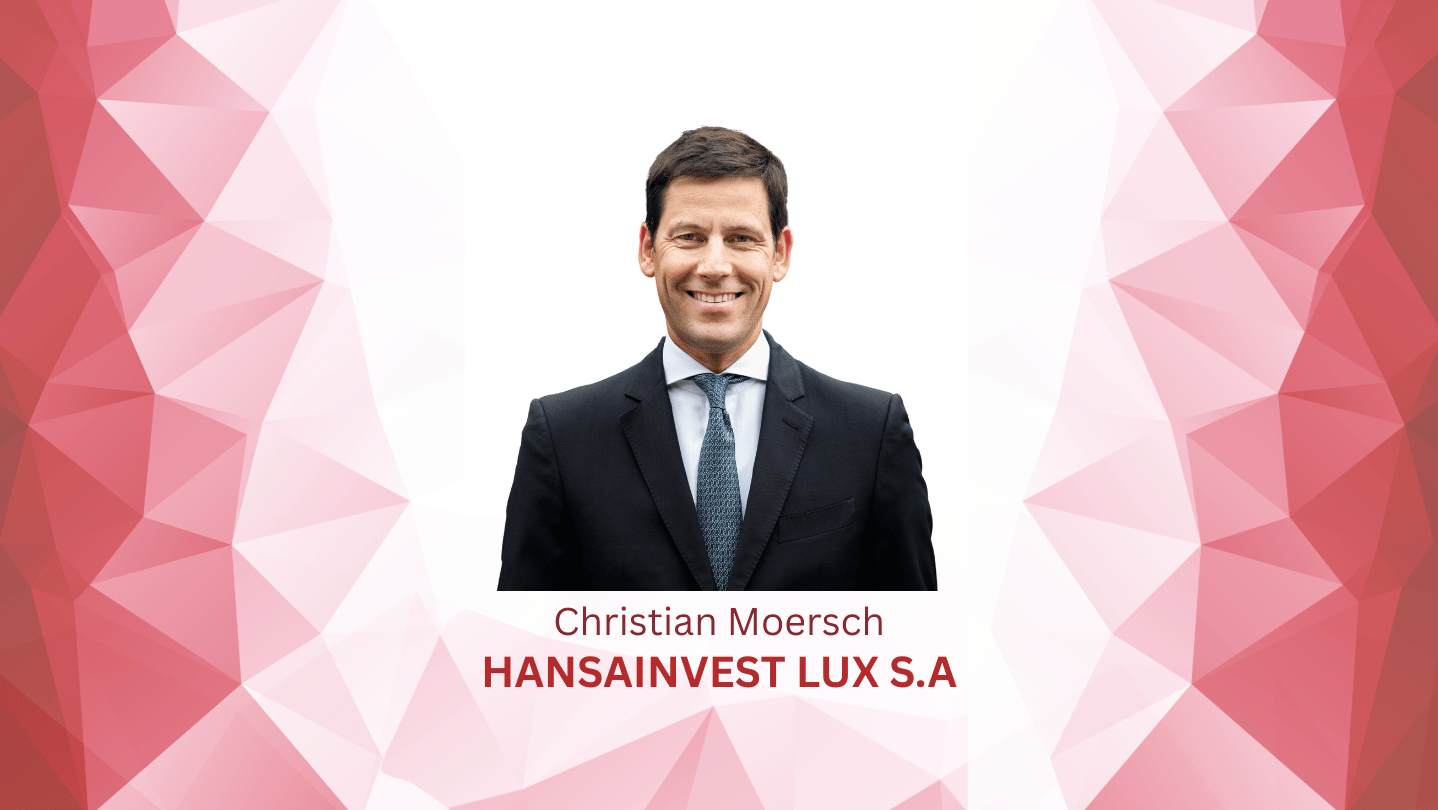
Article by Christian Moersch, Member of the Management Board of HANSAINVEST LUX S.A., as published in Insight/Out magazine #35.
The ELTIF Wave – Democratizing Access to Alternative Investments
Private markets in areas such as Private Equity, Infrastructure, and Private Debt are expanding at double-digit growth rates. PitchBook and Morningstar estimate their current volume at $15 trillion, projected to reach $20–25 trillion by 2030. Meanwhile, investment needs in digitalization, energy transition, and climate infrastructure are soaring. Institutional investors and public funds alone cannot meet these needs. By October 2024, the EU’s ESMA register listed 139 ELTIFs, two-thirds in Luxembourg. By June 30, 2025, this surged to 196 – a 40% increase in nine months. The ELTIF market’s volume and depth are experiencing significant growth.
The revised ELTIF Regulation (“ELTIF 2.0”) acts as a bridge: private capital can be channeled efficiently into the real economy within a harmonized European framework. The democratization of private markets is becoming reality—access is opening up without sacrificing regulatory certainty.
ELTIF – The UCITS for Illiquid Markets
Previous traditional private investment structures faced high minimums, complex onboarding, and manual processes. The solution lies in a familiar instrument: the global certificate.
Held as book-entry security by a custodian, it lets investors access ELTIFs through their existing securities accounts. When deposited with central securities depositories like Clearstream or Euroclear, ELTIFs can be traded directly, with automated settlement, daily valuation, and complete custodial support.
This streamlines order processing, reporting, and distribution across channels. Much like UCITS for liquid markets, the global certificate is a cornerstone of accessibility, benefiting everyone involved.
The Market Awakening – ELTIF Emerges as the Preferred Tool for Top Asset Managers in Retail Investment Strategies
ELTIF 2.0 is picking up speed, driven by regulation and growing market acceptance. Its role in savings and pensions is transformative for retail investors. In Germany, the Bundesbank notes that 40% of households—16 million—hold assets over €150,000. About 65% of these lack access to private markets due to regulatory barriers or limited products, creating a market of over 10 million households. Even a modest 5–10% allocation to illiquid assets suggests a potential exceeding $150 billion. With a widening pension gap and demand for stable returns, this market is set to grow.
Global managers such as BlackRock, J.P. Morgan, Allianz GI, Carlyle, StepStone, Ares Management, Apollo, EQT, Swiss Life, Neuberger Berman and Schroders launching ELTIF strategies. Platforms, distributors, and custodians are professionalizing rapidly, with digital order solutions and APIs on the rise. Alternative investments are becoming mainstream, and ELTIFs are the go-to vehicle for long-term retail strategies.
Portfolio Management – From a Slow Start to a Head Start
Unlike traditional closed-end funds, which rely on a subscription phase and capital calls (a slow start), open-architecture ELTIFs hit the ground running. Assets and capital must be ready from day one. Managers raise subscriptions upfront, investing in existing assets or using warehouse solutions. This demands disciplined cash management. Short-term private debt or bridge financing helps generate income while smoothing the typical J-curve.
Valuation and Redemption – Transparent Structure Beats Liquidity Illusion
Retail ELTIFs invest in illiquid assets such as Private Equity, Infrastructure, or Private Debt. Valuation is based on mark-to-model methods such as discounted cash flow or multiples. While liquid components may be valued daily, NAVs for illiquid assets are typically determined quarterly by external valuers. This hybrid valuation logic creates transparency while preserving long-term orientation.
Redemptions are possible under ELTIF 2.0—provided liquidity is sufficient. Typical features include lock-up periods (e.g., 24 months), quarterly redemption windows, redemption caps of 5–10% of NAV, and advance notice requirements. Tools such as gates, soft lock-ups, and notice periods allow for predictable redemption management.
Increasingly, redemptions are processed via digital platforms, APIs, and standardized workflows. Some providers are experimenting with internal matching systems as a secondary market option. The best practice is to balance liquidity buffers, valuation rules, and transparent communication. Retail investors need predictability—not the illusion of liquidity.
ELTIFs – No Traditional Pull Sales Approach
Despite regulatory easing under ELTIF 2.0, the market remains immature for retail investors. Long maturities, limited liquidity and unfamiliar asset classes require education; hence a pull strategy will not work. ELTIFs must be actively promoted, with financial advisors central to building trust. Growth depends on retail- and semi-institutional-ready platforms combining scalable access, administration and education. Momentum is driven by partnerships such as Revolut, BlackRock & Scalable Capital, Trade Republic with Apollo Global Management, Inc. & EQT Group, UBS with NAO, Commerzbank with Aquilla and LIQID & Neuberger Berman—reflecting the shift to younger, digitally native investors. Nevertheless, the traditional private banking system continues to play a crucial role.
Never Change a Winning Structure
The legal structure of an ELTIF strongly influences its success in retail. Tax treatment and technical compatibility with banking systems is decisive. Only if both functions seamlessly can ELTIFs be sold efficiently through banks, platforms, and advisors.
In Luxembourg, the Fonds Commun de Placement (FCP) has proven highly effective: fiscally opaque, legally flexible, and easy to integrate. It has demonstrated its success in the UCITS market, particularly in the German market. Approval by the CSSF is swift. Its open-ended structure further supports retail distribution, as it allows periodic subscriptions and redemptions within the regulatory framework, ensuring accessibility for a broad investor base. This flexibility enables smoother alignment with MiFID-driven advisory processes, compatibility with standard custody accounts, and straightforward integration into digital investment platforms. Alternatives such as the SCSp SICAV-RAIF are better suited to semi-institutional investors. For retail, the FCP remains the preferred, scalable model.
ELTIF Setup – Make or Buy?
Deciding whether to set up an ELTIF in-house (Make) or to outsource to an external third party AIFM (Buy), is strategic. Many opt for external AIFMs or service providers to avoid regulatory burdens and keep operations streamlined. Portfolio management and sales processes for institutional closed-end products may appear similar but often interfere with each other in reality, leading to inefficiencies and higher costs. In particular, internal AIFMs with a pure alternative focus frequently outsource certain components to specialists. And white-label models are gaining ground: external AIFMs handle administration, risk management, and compliance, while initiators focus on asset management and distribution.
In the retail business, transparency, digital integration, and clear role allocation are key. Partnerships are therefore crucial to scale ELTIF products effectively.
Luxembourg’s Unique Mix – Fast Fund Service Ecosystem and Pan-European Distribution
The ELTIF is a European product, but Luxembourg remains the leading domicile. Other EU jurisdictions can hardly match Luxembourg’s unique mix: fast and proactive regulator, international service ecosystem, and cross-border acceptance. The CSSF maintains a highly dialogue-oriented approach and was one of the first movers with regard to the ELTIF. The frameworks are established; the infrastructure is robust. Moreover, Luxembourg builds on decades of UCITS and AIF experience—accelerating scalability.
For distributors, Luxembourg products are easier to integrate into cross-border networks. Tax standards, operational templates, and legal certainty provide clarity for sustainable growth.
ELTIF – Europe’s Future Alternative Fund DNA
With demand rising for infrastructure, energy transition, and private credit, ELTIF 2.0 is arriving at exactly the right time. The vehicle unites private market access, retail suitability, and standardized distribution under a single European brand. For the first time, it is fully viable for retail investors—bridging institutional strategies with private long-term savings needs.
The success of ELTIFs will ultimately depend on achieving substantial market size and depth, a compelling product range, effective investor education combined with professional advice, standardized settlement processes, and efficient distribution platforms. Beyond the bulge-bracket houses, these platforms must also open up to the growing number of small and medium-sized providers, ensuring a diverse and competitive ecosystem.
If these elements align, ELTIF 2.0 has the chance to become the iPhone moment for Europe’s alternative markets – redefining Europe’s alternative investment landscape and shaping a new alternative fund DNA.