Skip to content

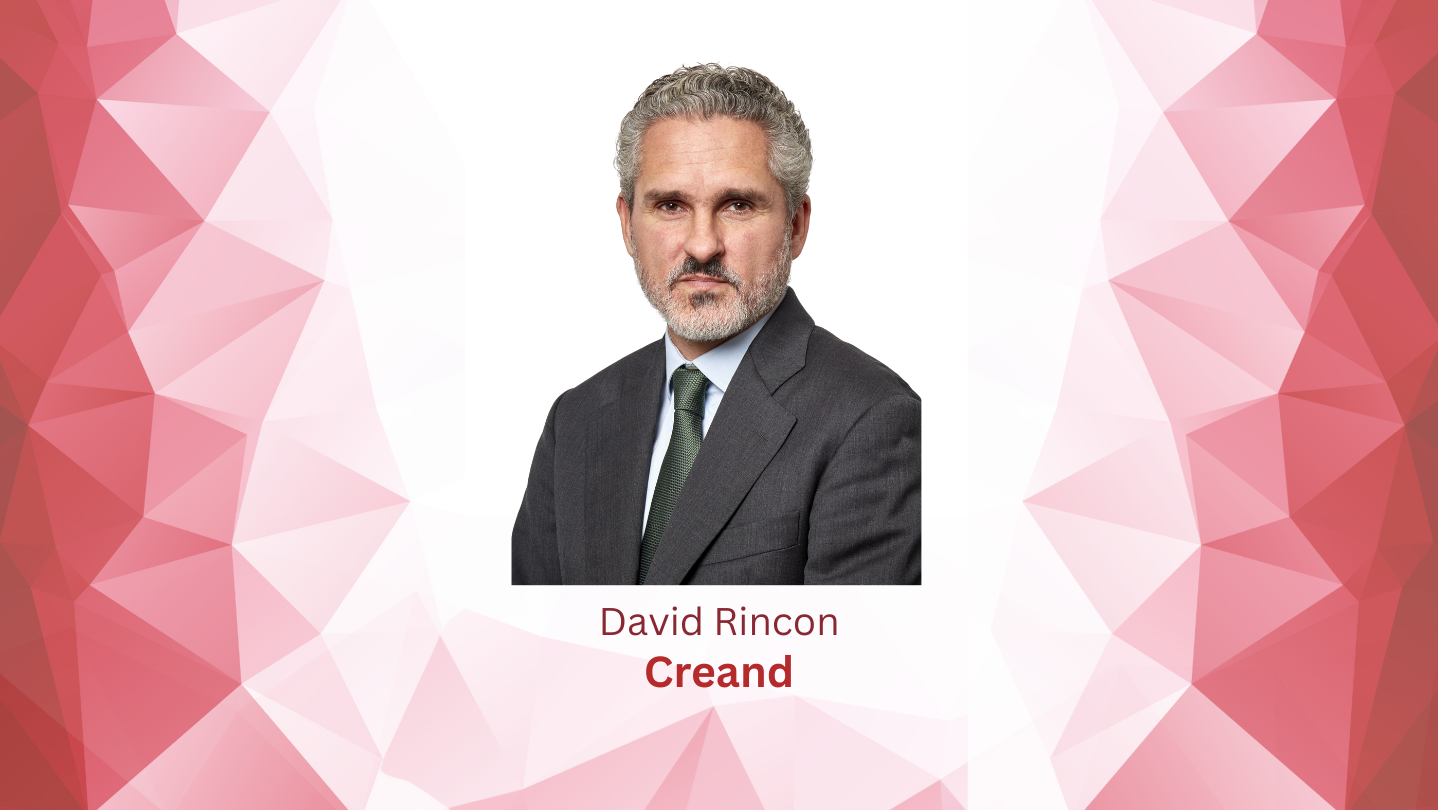
Article by David Rincon, Business Development at Creand, as published in Insight/Out magazine #35.
A Global Shift in Private Equity
Private Equity has never been more international, but the way funds are raised and structured is undergoing rapid change. Global LPs demand transparency, regulators tighten oversight, and tax regimes evolve constantly. Against this backdrop, the choice of fund domicile is no longer administrative, it is strategic. And here, Luxembourg has emerged as a frontrunner. It combines regulatory resilience, global credibility, and a sophisticated fund services ecosystem that attracts international managers. For Brazilian Private Equity firms, long reliant on Delaware or the Cayman Islands, Luxembourg is increasingly the new launchpad for global growth.
Brazil at a Turning Point
Brazil’s Private Equity scene is vibrant and expansive. With Latin America’s largest economy, a rising middle class, and booming sectors like healthcare, fintech, infrastructure, agribusiness, and energy transition, Brazil has become the region’s leading PE destination.
Brazil anchors Latin American Private Equity, not only by deal flow and sector breadth, but by scale. According to ANBIMA, Private Equity funds manage USD 154.31bn within an investment fund industry of USD 1,666.39bn. That pool is already globally connected as roughly 56% of PE AuM comes from foreign investors, with the remaining 44% spread across private, retail, and corporate segments. And its manager base is deep, out of 1,000+ asset managers overall, it accounts for 440 dedicated PE managers. That creates both opportunity (specialization, co‑investment, sector expertise) and competition for international capital. (Source: ANBIMA, 2025)
Those figures bring in some implications for Brazilian GPs:
Standards travel with capital. With more than half of the capital coming from abroad, governance, reporting, and ESG standards must meet EU/US institutional norms by default.
Cross‑border distribution matters more than ever. Access to European pension pools, insurers, and sovereigns is easier when the vehicle is AIFMD‑ready and recognizable to ICs and ODD teams.
Scale requires optionality. With hundreds of PE managers active, differentiation comes from flexible structures (feeders, co‑invests, compartments) that align strategy, ticket size, and speed‑to‑market.
As the local market matures, Brazilian managers face more complex fund structuring challenges. Offshore vehicles in the U.S. or Caribbean provided a straightforward path to global capital. That era is changing rapidly. And this is where Luxembourg fits. Its toolbox addresses these needs at once: institutionally familiar, efficient to launch, passportable across the EU, and compatible with feeder/co‑investment architecture. For Brazilian GPs, it is the shortest path from domestic strength to global reach.
The Reform Agenda: Progress and Complexity
For decades, Brazilian managers defaulted to offshore structures. But recent reforms are reshaping the landscape. CVM Resolution 175, which came into force in 2023, modernizes the entire fund industry and brings important updates for Private Equity funds (FIPs). While this represents progress, it also introduces new compliance burdens for managers already navigating a demanding environment.
The more decisive shift, however, has come on the tax front. Between the introduction of periodic (“come-cotas”) withholding for certain Brazil-domiciled funds and the new accrual-basis taxation of offshore income, the loss of exemptions, and most importantly the introduction of Law 14,754/2023, which aligned offshore vehicles with domestic taxation and eroded long-standing deferral strategies, have sharply reduced the advantages of traditional offshore structures. In addition, Law 14,711/2023 grants 0% WHT for certain non-resident investors in FIPs. The result is heavier compliance, more tax leakage, and rising uncertainty for international allocators when using the old playbook.
Enter Luxembourg: Built for Global PE
Luxembourg steps in not as an experiment but as a proven hub for global Private Equity. Well‑structured funds are typically tax‑neutral at the fund level, eliminating leakage. Its extensive treaty network and alignment with the EU provide predictability and comfort for investors. For Brazilian managers, that combination of efficiency and credibility is increasingly hard to match elsewhere.
Crucially, Luxembourg doesn’t just offer a new domicile, it offers a platform for scale. Its toolbox is among the most versatile in the world. Structures like the Reserved Alternative Investment Fund (RAIF), Specialised Investment Fund (SIF), SICAR, and the SCSp partnership enable managers to tailor vehicles to their strategy.
Among them, the RAIF stands out: optimal tax treatment, efficient, and lighter on regulatory hurdles, it has become a preferred option for first-time managers seeking to reach global capital.
Distribution is another decisive advantage. Through the Alternative Investment Fund Managers Directive (AIFMD), Luxembourg funds enjoy a European passport, enabling seamless marketing to professional and institutional investors across the EU. Beyond Europe, access depends on national regimes in locations such as the UK, Switzerland, or the Middle East. While not automatic, Luxembourg’s reputation often streamlines approvals compared to offshore structures.
Equally important is Luxembourg’s leadership on ESG. With sustainability now a prerequisite for many allocators, the jurisdiction has built a robust framework for sustainable finance and impact strategies, equipping managers to meet rising LP expectations.
Finally, credibility matters. Regulated by the CSSF and supported by a deep network of legal, tax, and fund services expertise, Luxembourg provides predictability at a time when stability is scarce. For Brazilian GPs aiming to win over risk-averse LPs, that combination of resilience and trust can turn a polite “no” into a firm commitment.
Real-World Momentum: Brazil Meets Luxembourg
All of this could remain theoretical, but the market is already moving. The shift is no longer just about “what if,” but about “what now.” And the early signals are already visible in the market:
Large fund providers are reporting that a number of clients investing in Chile, Peru, and Colombia are opting for Luxembourg fund structures to reach broader EU investor pools. Brazilian first‑time and spin‑out managers are launching RAIF/SCSp structures to attract European and Middle Eastern LPs, bypassing Caribbean defaults.
At the April 29, 2025 Luxembourg Private Equity Seminar in Lisbon (hosted by LPEA), ANBIMA flagged Brazil’s FIP reforms as drawing on European fund models—marking a tangible move toward integrated cross-border fund structuring.
These cases reflect a clear shift: Brazilian managers increasingly view Luxembourg not only as a regulatory haven but as a strategic vehicle for global expansion.
The Bigger Picture
Momentum toward Luxembourg unfolds against a global backdrop marked by rising interest rates, geopolitical fragmentation, tightening tax regimes, and elevated demand for stability. Meanwhile, sustainability has become non-negotiable for many allocators, further elevating the value of ESG-aligned, credible fund structures.
For Brazilian managers, the choice of fund structure is now strategic. Luxembourg delivers the stability, credibility, and investor access that align with these new realities.
Looking Ahead: A Strategic Pivot
For Brazilian managers, this moment is more than adaptation, it is a chance to reposition for the next phase of global Private Equity. Luxembourg enables GPs to:
- Safeguard long-term capital through a stable regulatory and tax framework.
- Broaden investor access via European passporting and enduring global recognition.
- Boost credibility with sovereign wealth funds, pensions, and ESG-focused allocators.
- Scale strategically with feeder funds, co-investment vehicles, and ESG-compatible structures.
Rather than preserve the status quo, Brazilian managers can leverage Luxembourg as a springboard to become global players.
Conclusion: A Strategic Imperative
For Brazilian Private Equity managers, Luxembourg has evolved from a “nice-to-have” option to a strategic imperative. In today’s fundraising environment—where transparency, compliance, and scale define success—Luxembourg provides the clarity and credibility that international investors demand.
Brazil’s Private Equity future is not just national—it is global. And its next chapter does not begin in New York or the Cayman Islands. It begins in Luxembourg.